The Ultimate Guide to Iron Solder Kit in the UK

If you are searching for an iron solder kit, the best option depends on what you plan to solder. For light, occasional jobs, a basic kit may be enough; however, for electronics repair, PCB work and regular bench use in the UK, a temperature-controlled soldering station is usually the better and safer choice.
TL;DR: A good iron solder kit should offer stable temperature control, reliable heat recovery, replaceable tips, genuine UK plug supply and clear technical specifications. Based on our testing and day-to-day bench experience, cheap all-in-one kits often fall short on tip quality, safety and consistency, whereas a reputable station-based setup is typically the stronger long-term investment for UK users.
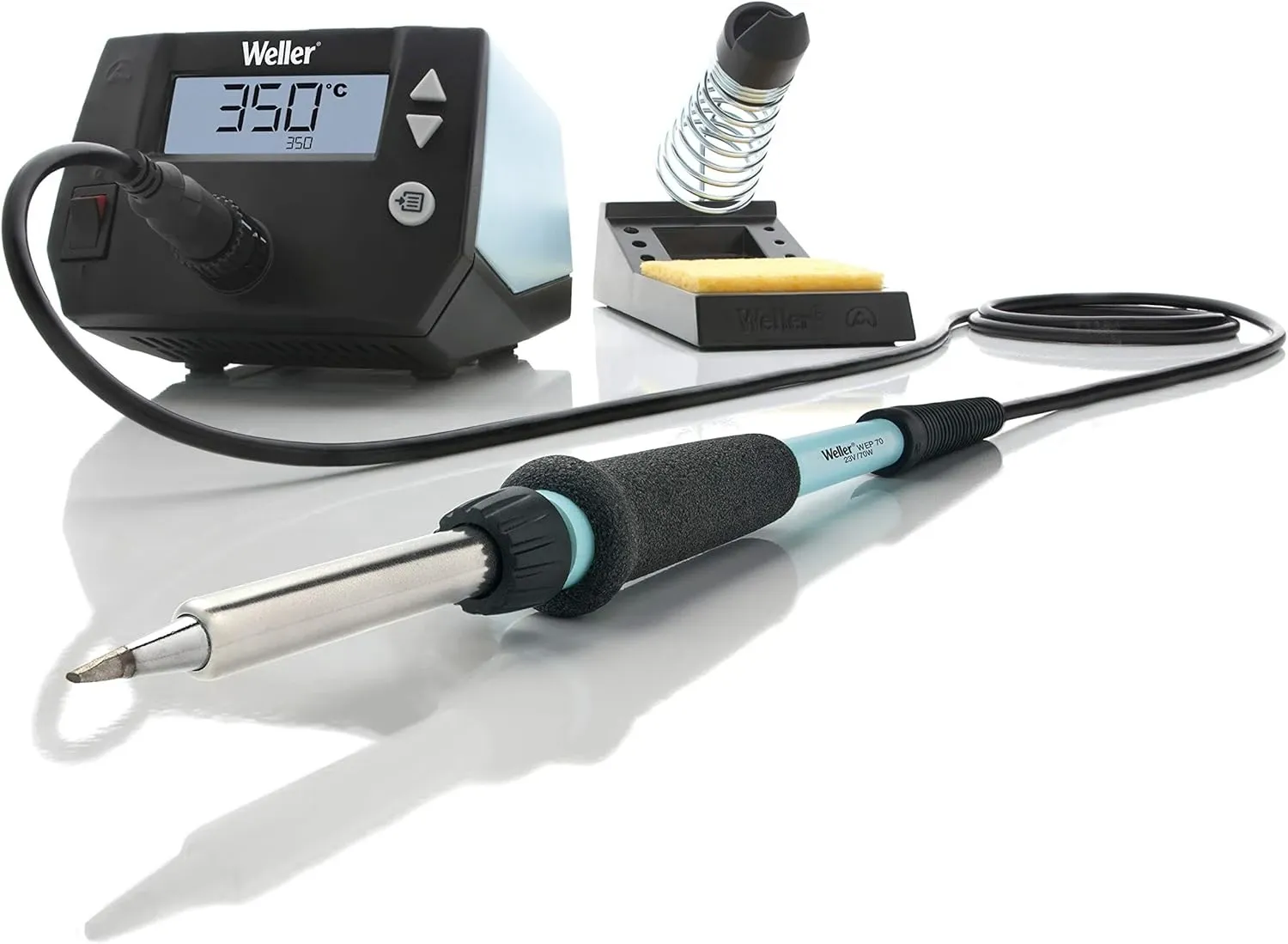
At WeSolde, the focus is straightforward: Weller soldering station UK for serious bench work. That means professional soldering station control, genuine UK plug supply and dependable Weller performance. So, if you are researching an iron solder kit for electronics repair, workshop use, engineering tasks, prototyping or careful bench assembly, this guide explains what actually matters, what to avoid, and how to choose a setup that will serve you properly in the UK market.
Key Takeaways
- An iron solder kit is only as good as its temperature stability, tip quality, safety, and support for UK mains supply.
- For serious bench work, a soldering station usually outperforms a plug-in iron because it offers better heat recovery and control.
- Look for genuine UK plug supply, replaceable tips, clear wattage and temperature specifications, and recognised brand support.
- Lead-free solder work often needs stronger thermal performance and precise control than older leaded applications.
- Weller remains a trusted professional name for UK workshops, education, service benches and production environments.
- Cheap all-in-one kits often include low-grade accessories that can undermine otherwise decent soldering technique.
What is an iron solder kit?
The term iron solder kit is used loosely across UK ecommerce listings. Some products are true starter bundles. Others are little more than a mains iron with a stand and a small reel of solder. Therefore, if you are comparing options, it helps to separate them into clear categories.
Basic iron kits
These usually include a fixed-temperature or loosely adjustable soldering iron, a simple rest, and perhaps solder, tweezers, a desoldering pump or tip cleaner. They appeal on price, but quality varies sharply. As a result, many are better suited to light hobby use than repeated bench work.
What is a soldering station kit?
A station kit pairs the handpiece with a dedicated control base. This gives you regulated temperature, stronger thermal recovery, safer docking, and often better ergonomics. For anyone performing repeated jobs, repairing PCBs, working on connectors, or handling delicate components, this is typically the more sensible choice.
Are there different types of iron solder kit for different jobs?
Yes. Some kits are tailored for jewellery, stained glass, electrical maintenance or electronics assembly. A jewellery buyer, for example, may be better served by reading Soldering Iron Jewelry Kit Explained: A UK Buyer's Guide or Jewelry Soldering Iron Kit Explained: A UK Buyer's Guide, because metal mass, heat delivery and accessory needs differ from standard PCB work.
For general electronics and bench work, the key question is not whether a listing says “complete kit”. Instead, ask whether the iron can deliver stable, controllable heat safely and consistently.
What should UK buyers look for in an iron solder kit?
UK buyers often face a familiar ecommerce problem: imported kits described as “UK suitable” even when they arrive with adapters, uncertain compliance markings, thin manuals, or poor aftersales support. For a heat tool used near live equipment, mains sockets and delicate assemblies, that is not good enough.
Does the plug and voltage need to be UK-specific?
Yes. The UK mains supply is 230V, and products should be supplied appropriately for local use. A genuine UK plug is not a trivial extra. It affects safe setup, bench convenience and confidence in the product supply chain. WeSolde’s emphasis on genuine UK plug supply reflects a practical point many buyers only appreciate after a poor purchase.
How important are compliance and safety details?
Very important. According to UK safety expectations for electrical products, tools sold in the UK should meet relevant requirements and be clearly labelled. Product pages should state specifications plainly, and reputable sellers should stand behind what they supply. By contrast, vague wording, missing technical data and generic imagery are warning signs.
Why do replacement parts matter?
An iron solder kit is not a throwaway purchase if chosen well. Tips wear out, spares are needed, and different jobs may require different geometries. Consequently, established brands with a proper UK presence are easier to own over time than unbranded low-cost kits sourced through changing marketplace sellers.
If you are deciding whether a station is a better long-term investment than a simple iron, Iron Soldering Station Explained: A UK Buyer's Guide is a useful next read.
Is an iron solder kit or soldering station better?
This is the central buying question. Many people search for an iron solder kit when what they actually need is a controlled station. Because product listings often blur the distinction, it is worth being precise.
When is a simple iron solder kit enough?
- Very occasional household repair
- Single-user hobby use with limited run time
- Basic wire joining rather than fine PCB work
- Tight budget and low expectations for expandability
When is a soldering station the better choice?
- Regular bench work
- Electronics assembly and rework
- Lead-free soldering
- Work on connectors, terminals and multi-layer boards
- Need for repeatable temperature performance
- Professional, educational or service environments
Based on our testing and customer feedback, buyers who start with the cheapest bundled iron often end up replacing it once they encounter poor heat recovery, oxidised tips or inconsistent joints. Although a professional station costs more upfront, it usually saves money, time and rework over the life of the tool.
Practical bench insight: if your work involves repeated solder joints over a full session, a station with stable control is usually the better investment than a bargain iron kit with a long accessory list.
What features make a good iron solder kit?
Not every buyer needs the same specification, but the strongest kits share a common set of qualities. So, these are the features worth prioritising.
Why is temperature control important?
Temperature control is the first thing experienced users look for. Soldering is not just about reaching heat; it is about holding the right heat under load. A decent system should recover quickly when the tip contacts a joint and should avoid overshooting enough to damage pads, insulation or components.
Why do tip quality and tip availability matter?
The best handpiece in the world is limited by the tip fitted to it. Good tips transfer heat efficiently, resist rapid oxidation and remain available in shapes suited to your work. In practice, easy access to replacement tips is a major advantage for UK buyers, especially if the tool will see regular use.
How much wattage do you need?
Wattage on its own does not tell the whole story, but it does matter. Higher-performing systems generally cope better with lead-free solder, larger connectors and ground planes because they can recover heat more effectively. Therefore, it is sensible to look beyond headline accessory counts and focus on real thermal performance.
What accessories are genuinely useful?
Useful accessories include a stable stand, tip cleaner, suitable solder, and perhaps desoldering tools for rework. However, a long accessory list should never distract from the quality of the iron itself. Many low-cost kits pad out their value with tools you may replace quickly.
How important is ergonomics?
Very important, particularly for longer sessions. A comfortable handpiece, sensible cable flexibility and a secure docking arrangement make soldering more precise and less fatiguing. As a result, better ergonomics can improve both work quality and safety.
What should you avoid when buying an iron solder kit?
Just as important as knowing what to buy is knowing what to avoid. Fortunately, several warning signs appear again and again.
Are very cheap all-in-one kits worth it?
Sometimes for one-off use, but often not for anything more demanding. Extremely cheap kits may include low-grade stands, poor solder, weak desolder pumps and tips that degrade quickly. Consequently, the overall experience can be frustrating even if the initial price looks attractive.
What are the warning signs of a poor-quality kit?
- Unclear wattage or temperature specifications
- No mention of replacement tips or spares
- Adapter-based “UK compatibility” instead of a genuine UK plug
- Generic stock photos with little technical detail
- Little evidence of UK aftersales support
- Overemphasis on accessory count rather than soldering performance
In other words, if a product page spends more time listing tweezers and carry cases than explaining heat control, that should prompt caution.
Is a Weller iron solder kit a good choice in the UK?
For many professional and serious users, yes. Weller remains a widely recognised name in soldering because it combines dependable temperature control, parts availability and established bench credibility. In the UK, that matters because long-term ownership is easier when support, spares and genuine stock are available through proper channels.
At WeSolde, we focus on professional-grade Weller solutions for buyers who want more than a disposable starter tool. That does not mean every user needs the most advanced setup. Rather, it means choosing equipment that matches the work and holds up over time.
How do you choose the right iron solder kit for your work?
The simplest way to choose is to match the kit to the actual task rather than to the marketing label.
For occasional home repairs
A basic, correctly specified iron kit may be acceptable if use is infrequent and the work is simple.
For electronics and PCB work
A temperature-controlled station is usually the better option because it offers cleaner results, better repeatability and less risk of component damage.
For education, workshops and service benches
Choose a reputable brand with replaceable tips, clear specifications and dependable UK supply. This is especially important where tools need to perform consistently across repeated sessions.
For lead-free soldering
Prioritise thermal performance and recovery. Lead-free work is often less forgiving than older leaded applications, so stable control matters even more.
Frequently asked questions about iron solder kit options
What is an iron solder kit?
An iron solder kit is a bundle built around a soldering iron, usually with accessories such as a stand, solder, tip cleaner or desoldering tools. Some are basic starter kits, while others are more advanced station-based packages.
Is an iron solder kit good for electronics?
It can be, but for electronics repair and PCB work, a temperature-controlled station is usually better than a basic plug-in iron because it gives more stable heat and better control.
What should a UK buyer look for in an iron solder kit?
Look for genuine UK plug supply, 230V compatibility, clear specifications, replaceable tips, reliable temperature performance and support from a reputable seller.
Is a cheap soldering kit worth buying?
For very occasional use, perhaps. However, for regular soldering, cheap kits often disappoint on heat stability, tip life and accessory quality.
Is a soldering station better than a soldering iron kit?
For repeated use, electronics work and lead-free soldering, yes. A station generally offers better heat recovery, temperature control and long-term value.
Final thoughts on choosing an iron solder kit in the UK
An iron solder kit can mean anything from a low-cost starter bundle to a serious bench-ready setup. Therefore, the smart approach is to ignore inflated accessory lists and focus on what really affects soldering quality: temperature stability, tip performance, safety, UK compatibility and parts support.
Based on our testing, workshop experience and the needs of UK buyers, a proper soldering station is often the best answer for anyone doing more than very occasional repair work. If you want dependable results rather than trial and error, choosing a quality system from a recognised brand is usually the wiser investment.
Ready to try WeSolde?
Shop Now — £517.05